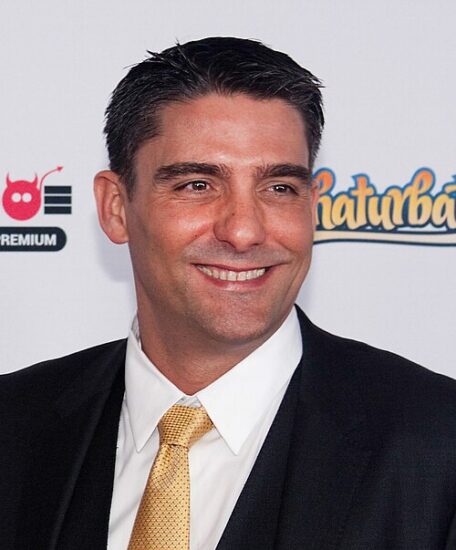
If you’ve ever wondered what cinema looks like when someone decides that good manners are a hindrance, the answer is Bruce LaBruce. This Canadian doesn’t make films so you can feel good about yourself while sipping an overpriced latte. His works are more like a train wreck: you know it’s going to hurt, but you can’t look away. Since the 80s in Toronto, LaBruce understood that queer aesthetics were becoming too tame, too “all-ages.” And he, logically, decided that simply wouldn’t do.
The Fanzine as Bible and the Camera as a Weapon
It started with J.D.s, a fanzine that basically told the world that being gay didn’t mean wanting to get married and own a dog. It was the birth of Homocore. LaBruce brought the filth of punk into the realm of the explicit. In films like No Skin Off My Ass (1991)—which they say fascinated Gus Van Sant enough to fund him—there are no luxury sets. There are tiny apartments, people with questionable haircuts, and light that looks stolen from a back alley.
It’s not that he didn’t know how to light a scene. It’s that he wanted you to feel the Toronto cold. LaBruce uses 16mm grain to make skin look real, with its blemishes and its tremors. His actors don’t look like models calculating taxes; they look like people who just walked in off the street, in a hurry, with a half-finished cigarette. It’s the aesthetic of the raw, where a sigh sounds like a defeat and an encounter is, above all, a political act of disobedience.
Zombies, Skinheads, and the Holy Mother Church
LaBruce loves to play with whatever makes you twitchy. In Otto; or, Up with Dead People (2008), he uses a zombie to talk about alienation in the big city. It’s a brilliant idea: we are so empty that only a living corpse can be honest. The film is slow, heavy, almost hypnotic, breaking that machine-gun rhythm of modern cinema to force you to breathe the same stagnant air as the protagonist.
And then there’s his obsession with uniforms and religion. In The Misandrists (2017) or the controversial L.A. Zombie, he dedicates himself to dismantling symbols of power. Let’s be honest, he likes nothing more than taking an authority figure and putting them in a situation where the only things that matter are gravity and friction. It’s his way of saying that, in the end, we are all made of the same fragile flesh that reacts without asking anyone’s permission—not even the Pope’s.
The Politics of Skin Without Filters
What separates LaBruce from a mere weekend provocateur is his ability to use the explicit as a tool for social criticism. He doesn’t film the act for the sake of the act. He uses it to show you the absurdity of our norms. In his shoots, there is no “peace of mind” found in big productions; there is an urgency felt in every frame.
“Sometimes the image is so direct that the brain looks for a place to hide. But Bruce grabs you by the scruff of the neck and forces you to see that transgression isn’t a costume; it’s a necessity when the world has become too comfortable and empty.”
His style has influenced fashion, video art, and a generation of filmmakers who learned that you don’t need a million-dollar budget if you have an idea that burns. LaBruce is still there, filming with the same grime and the same intelligence, reminding us that if art doesn’t bother you a little, it might not be art at all—just another form of interior decoration.
The Last Romantic on the Dirty Sidewalk
Bruce LaBruce is the architect of an aesthetic that prefers the scar over the makeup. His films are love letters sent from a dimly lit basement, reminding us that beauty also lives in clumsiness, in sweat, and in the refusal to fit into a perfect three-item list. In the end, after watching his cinema, you feel a bit more alive and, possibly, like you need a shower. But that is exactly what he was looking for.